
Moving Insurance
and Protection
of Your Belongings
in the UK
Moving house is stressful enough ‘ worrying about potential damage to your belongings only adds to it. Many people are unsure what “insurance” actually means in the context of removals, and often confuse liability, cover, and full insurance protection.
This page explains how protection works during a UK house move, what is normally included, what is not covered, and how you can reduce risks before moving day.
Why Insurance Matters When Moving House
When you move home, you are transporting everything you own – furniture, appliances, personal items, and sometimes high-value possessions. Even with careful handling, transport always involves some level of risk.
Vans travel long distances, items are lifted, carried through staircases, and loaded tightly for secure transit. Most moves go smoothly, but accidents can happen. Insurance or liability cover exists to provide clarity and protection in those rare situations where something goes wrong.
Understanding how protection works gives peace of mind and helps avoid disputes later.
What Type of Protection Is Usually Included in a House Move
Most UK removal companies operate under limited liability terms. This means they accept responsibility for loss or damage caused by their negligence, but compensation is typically subject to limits per item or per load.
Standard protection usually covers:
- Damage caused during loading or transport
- Loss directly attributable to the removal company
- Incidents occurring while goods are under the company’s control
- At Great Moving, our standard service includes Goods in Transit insurance cover up to £50,000 and Public Liability insurance up to £2,000,000 for additional protection and peace of mind.
However, this is not the same as full-value insurance. Compensation may be capped, and certain conditions must be met for a claim to be valid.
What Is Not Covered by Standard Moving Protection
There are common situations where standard liability does not apply.
For example:
- Items packed by the customer themselves
- Pre-existing damage or wear and tear
- Fragile goods not declared in advance
- Mechanical or electrical faults without visible external damage
- Cash, jewellery, and high-value items not listed or declared
If you are packing yourself, you typically accept responsibility for internal breakages unless there is clear external damage caused during transport.
Difference Between Removal Company Liability and Moving Insurance
Removal company liability means the company accepts responsibility only where negligence can be demonstrated and within agreed limits.
Full moving insurance, on the other hand, can provide broader protection based on the declared value of goods. This type of cover may be purchased separately and usually requires an inventory and declared values.
A common misconception is that all removal services automatically include full insurance. In reality, most include liability protection, not comprehensive insurance.
Understanding this distinction helps you decide whether additional cover is necessary.
How to Prepare Your Belongings for Insurance Coverage
Preparation plays a major role in successful protection.
Before moving:
- Create a clear inventory of major items
- Take photographs of high-value or fragile belongings
- Declare expensive items in advance
- Ensure fragile goods are properly packed
- Keep important documents separate
Proper preparation reduces disputes and makes any potential claim process clearer and faster.
How Professional Movers Reduce the Risk of Damage
Insurance is a safety net – but prevention is always better.
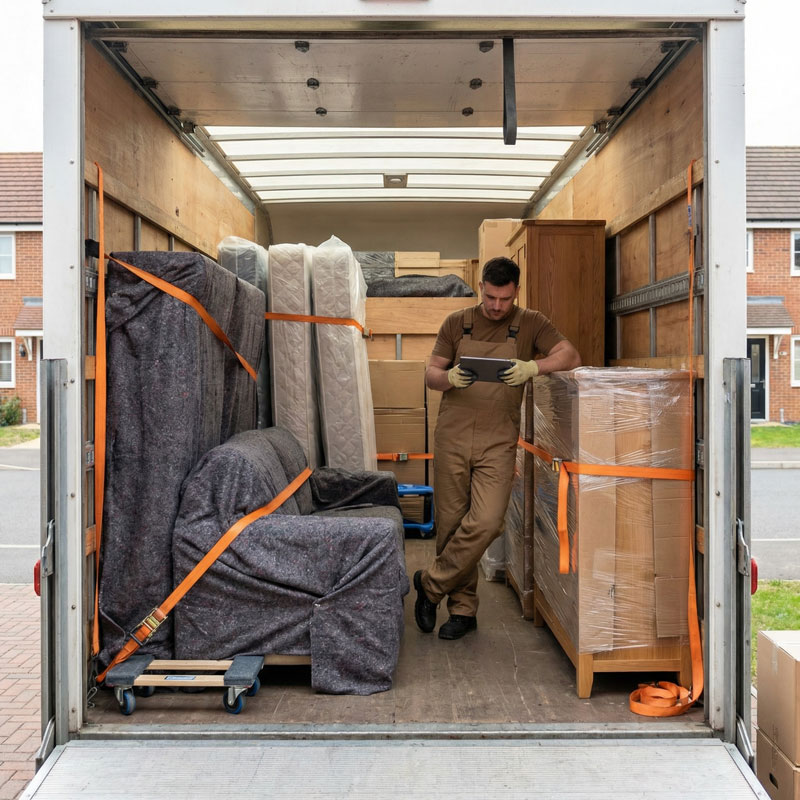
Experienced teams reduce risk through correct lifting techniques, protective materials, careful loading systems, and route planning. Furniture is wrapped, secured with straps, and positioned to minimise movement inside the van.
Choosing professional home removals in London means working with a team that understands handling procedures, property access challenges, and risk management – which significantly lowers the chance of damage occurring in the first place.
Everything you want to know before you move in London
Here you’ll find answers to the most frequently asked questions about pricing, packing, timing, and our moving process.
If you want to explore more topics, you can find the full list on our FAQ page via the button below.
No. It is not legally mandatory, but removal companies must operate under liability terms. Additional insurance is optional but recommended for high-value moves.
Generally, items packed by customers are not covered for internal damage unless clear negligence is proven.
Notify the removal company in writing as soon as possible, ideally within the timeframe stated in their terms and conditions.
Most quotes include limited liability protection. Full-value insurance is usually an optional extra.
Declare valuable items, use professional packing where possible, document conditions beforehand, and clarify cover limits before booking.

Ready To Move?
Your hassle-free London move starts here. Book trusted movers and get an instant quote in minutes.