
Parking Permits
and Local Access Rules
for Moving in London
Parking is one of the most underestimated challenges when moving house in London. Even a well-planned relocation can quickly turn stressful if the removal van has nowhere to park legally near the property. Parking restrictions, controlled zones, and local access rules vary widely across boroughs, and failing to plan ahead can lead to delays, fines, and unexpected costs.
Many people assume movers will “just find a space,” but in London this is rarely realistic. Without proper arrangements, loading and unloading take longer, neighbours may complain, and penalties can be issued. This page explains how parking permits work for removals, when they are required, and what local access rules you should consider – so you can avoid problems on moving day.
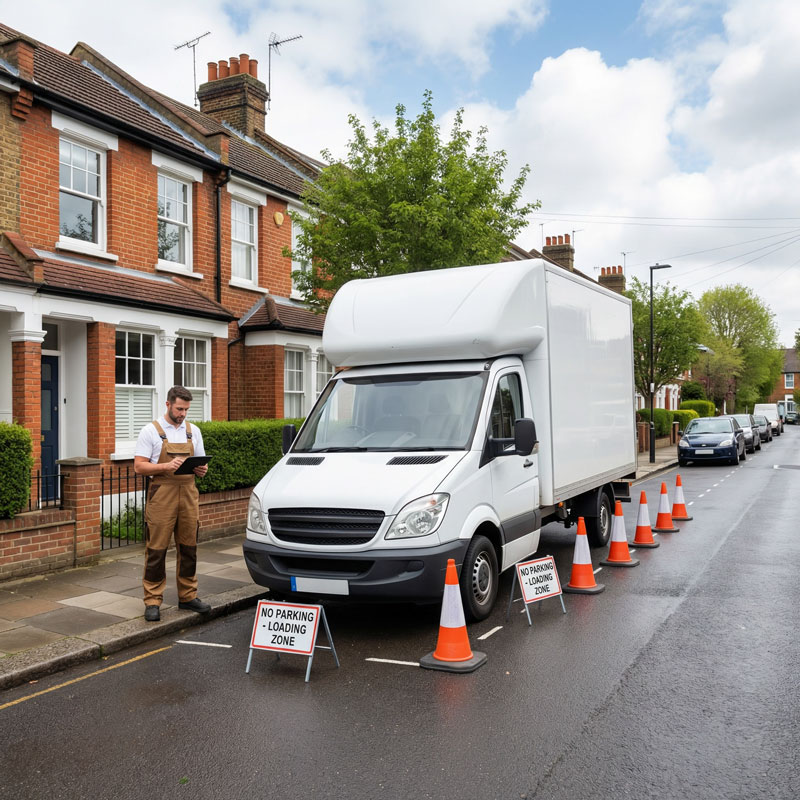
Why Parking Permits Matter During a House Move
Parking permits are essential because they allow the removal van to park close to your property. Shorter carrying distances mean faster loading, reduced labour time, and less physical strain on movers.
Without a permit, vans may need to park far away or move repeatedly to avoid tickets. This slows the process and increases the total time spent on the job. In busy London streets, enforcement officers are active, and fines can be issued quickly.
Arranging parking properly helps keep the move efficient, legal, and stress-free. You check our check list about how to prepare for a move
Do You Need a Parking Permit for a Removal Van?
In many London boroughs, a parking permit is required if your street is within a controlled parking zone or has resident-only restrictions. This is especially common in central and residential areas.
You may not need a permit if there are unrestricted bays, private driveways, or loading bays that allow sufficient time for removals. However, loading bays often have time limits that are too short for a full move.
A common misconception is that hazard lights make parking legal – they do not. Always check local rules in advance.
How to Apply for a Parking Permit in London
Parking permits for removals are usually arranged through the local council. Applications are made online, with processing times ranging from a few days to two weeks, depending on the borough.
In most cases, the resident is responsible for applying, as councils require proof of address. We can assist with guidance or apply on your behalf if authorised.
It’s important to apply early and confirm permit dates and times to match your moving schedule.
Parking Permit Rules by London Borough
Parking permit rules for removals vary significantly between London boroughs. Application methods, fees, processing times, and enforcement levels are all set locally, so it’s important to check the specific requirements for your area before moving day.
For example, parking permits in Westminster and Camden are usually required well in advance due to high demand and strict enforcement.
Boroughs like Islington, Hackney, and Kensington & Chelsea also operate controlled parking zones with limited loading allowances. In Lambeth, Wandsworth, and Southwark, permits are often easier to obtain but still require advance notice.
If you’re unsure which council applies to your address, your removals company can help identify the correct borough and guide you to the right permit process.
Check parking permit guidance for:
Common Access Restrictions to Consider
Beyond parking, access restrictions can affect how a move is carried out. Narrow streets may limit van size, while gated communities often require advance permission or key access.
Some roads have time-based restrictions, allowing loading only during certain hours. Height or weight limits can also apply, particularly near residential estates or low bridges.
Identifying these issues early helps avoid last-minute complications.
What Happens If Parking Isn’t Arranged Properly
If parking is not arranged correctly, delays are almost inevitable. Movers may need to wait, relocate the van, or carry items over long distances.
This often results in additional working hours, increased costs, and frustration for everyone involved. Parking tickets or neighbour disputes can also arise during the move.
Most moving-day problems linked to parking are avoidable with proper preparation.
How Professional Movers Handle Parking and Access Issues
Experienced movers understand London’s parking challenges and plan accordingly. They assess access in advance, advise on permit requirements, and prepare alternative options if needed.
Professional teams coordinate timing, van size, and loading strategy to minimise disruption. If unexpected issues arise, they adapt quickly using a clear plan B.
For complex moves, professional home removals in London offer the experience needed to manage parking and access smoothly.
Learn more on our home removals page.
Everything you want to know before you move in London
Here you’ll find answers to the most frequently asked questions about pricing, packing, timing, and our moving process.
If you want to explore more topics, you can find the full list on our FAQ page via the button below.
Usually the resident, as councils requires the proof of address.
Anywhere from a few days to two weeks, depending on the borough.
We can assist, but permission and details are usually required from the resident.
Contact your movers immediately to adjust the plan and avoid delays.
Yes. Each borough has its own regulations, fees, and processing times.

Ready To Move?
Your hassle-free London move starts here. Book trusted movers and get an instant quote in minutes.